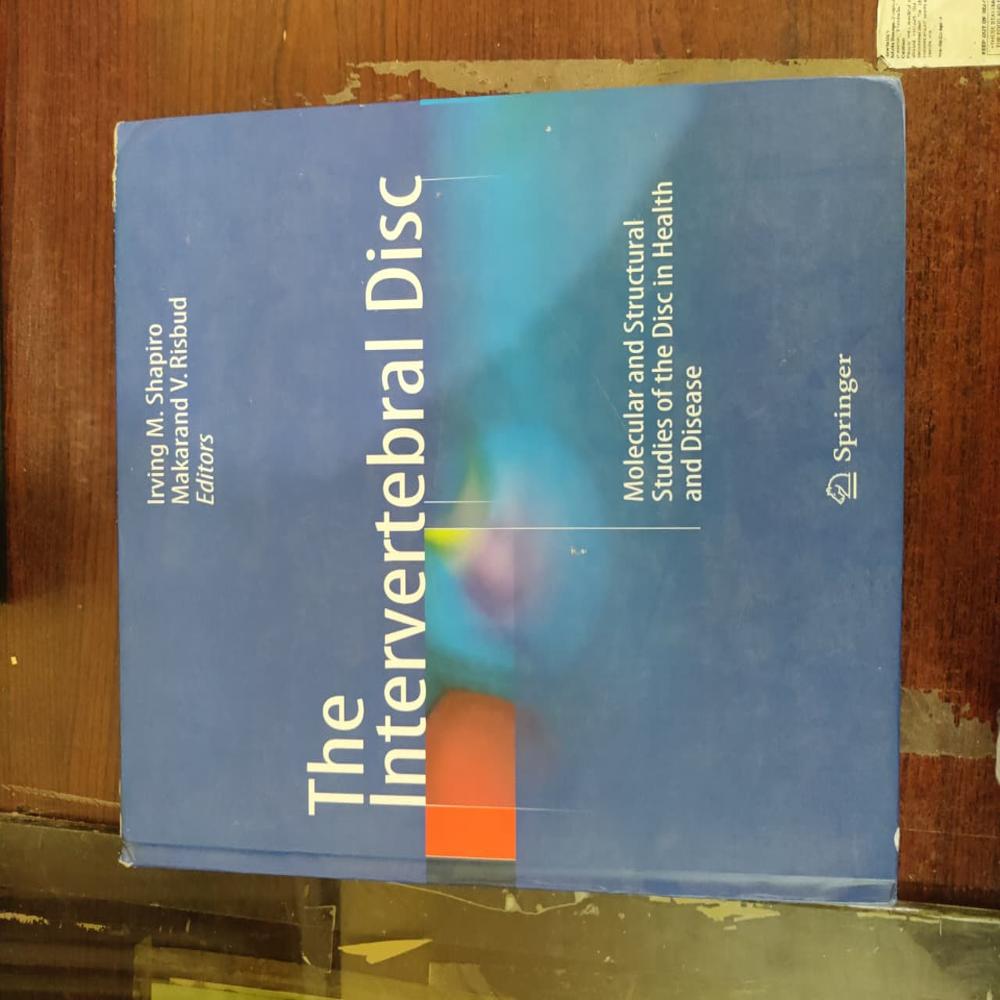
The book in your image is The Intervertebral Disc: Molecular and Structural Studies of the Disc in Health and Disease
Editors:
- Irving M. Shapiro
- Makarand V. Risbud
Published by Springer
Description
This is a specialized medical and scientific textbook about the intervertebral disc the soft cushion-like structure located between the bones of the spine (vertebrae).
The book focuses on understanding how spinal discs work in normal health and what changes occur in disease and degeneration.
Topics usually covered:
- Structure and biology of intervertebral discs
- Disc development and aging
- Molecular and cellular mechanisms
- Disc degeneration and lower back pain
- Biomechanics of the spine
- Inflammation and tissue changes
- Regeneration and repair strategies
- Current and future spinal research
Who typically uses this book?
- Spine researchers
- Orthopedic surgeons
- Neurosurgeons
- Medical students and residents
- Biomedical and rehabilitation professionals
This book is more research-oriented and explains the science behind spinal disc health, degeneration, and treatment development.
Comprehensive Insight into Intervertebral Disc BiologyThis book provides an all-encompassing examination of the intervertebral disc's molecular and structural properties. Through contributions from leading scientists, it connects basic science and clinical perspectives, offering a detailed look at both the healthy and diseased states of the disc. Its well-curated chapters serve as essential resources for understanding spine health and disease mechanisms.
Cutting-edge Research and Reference MaterialFeaturing the latest findings from the field, the text covers a wide spectrum of topics relevant to spine research and clinical practice. It is ideally suited for use as a primary reference or supplementary reading material for advanced coursework, research endeavors, or professional development. The print quality and organization make it accessible for continuous study and reference.
FAQ's of The Intervertebral Disc: Molecular and Structural Studies of the Disc in Health and Disease Book:
Q: How does The Intervertebral Disc book benefit researchers and medical professionals?
A: The book serves as a comprehensive academic resource, offering in-depth analyses of intervertebral disc biology and pathophysiology. It brings together molecular, structural, and clinical insights, making it valuable for researchers, clinicians, and medical students seeking authoritative guidance for research or practice.
Q: What topics are covered in this edition of the book?
A: Topics include the molecular composition of the disc, cellular and matrix interactions, biomechanical properties, pathogenesis of disc diseases, and recent advancements in diagnostics and therapeutics. The book integrates basic science with clinical implications, ensuring broad relevance.
Q: When was the first edition of the book published and by whom?
A: The first edition was published around 2006 by Springer, a reputable academic publisher known for high-quality scientific texts. This helps maintain up-to-date and credible reference material for the readers.
Q: Where can this book be effectively used?
A: The book is suited for research libraries, university courses, medical training programs, hospitals, and clinical research centers where an in-depth understanding of spine and disc health is essential.
Q: What is the process for using this book as a reference in academic work?
A: To use this book as a reference, readers can consult specific chapters or topics that align with their research or coursework. Each section is designed for standalone use, with clear indexing and color print facilitating quick access to pertinent material.
Q: How does the book's format enhance learning and reference?
A: The A4-size softcover with matte paper and color print ensures visual clarity and ease of handling during study sessions or reference tasks. Its standard thickness and manageable weight also make it a practical addition to any academic or clinical environment.

 GST No.33ACKPV1876F1ZB


 Our Products