Professional Communication in Speech-Language Pathology: How to Write, Talk, and Act Like a Clinician (Third Edition) Book Price & Specifications
Weight Approximately 500-700g
Thickness Approx. 15-20 mm
Shape Rectangular
Print Type Paperback
Paper Type Standard White Paper
Paper Size A4 approx.
Pages About 300-350 pages (estimate)
Books Type Other, Educational/Reference Book
Board Type Softcover
Board Thickness Standard for paperback
Binding Other, Perfect Binding
Audience Speech-Language Pathology Students, Clinicians, Educational Institutions, Speech-Language Pathology Students, Clinicians, Educational Institutions
About Professional Communication in Speech-Language Pathology: How to Write, Talk, and Act Like a Clinician (Third Edition) Book Detail
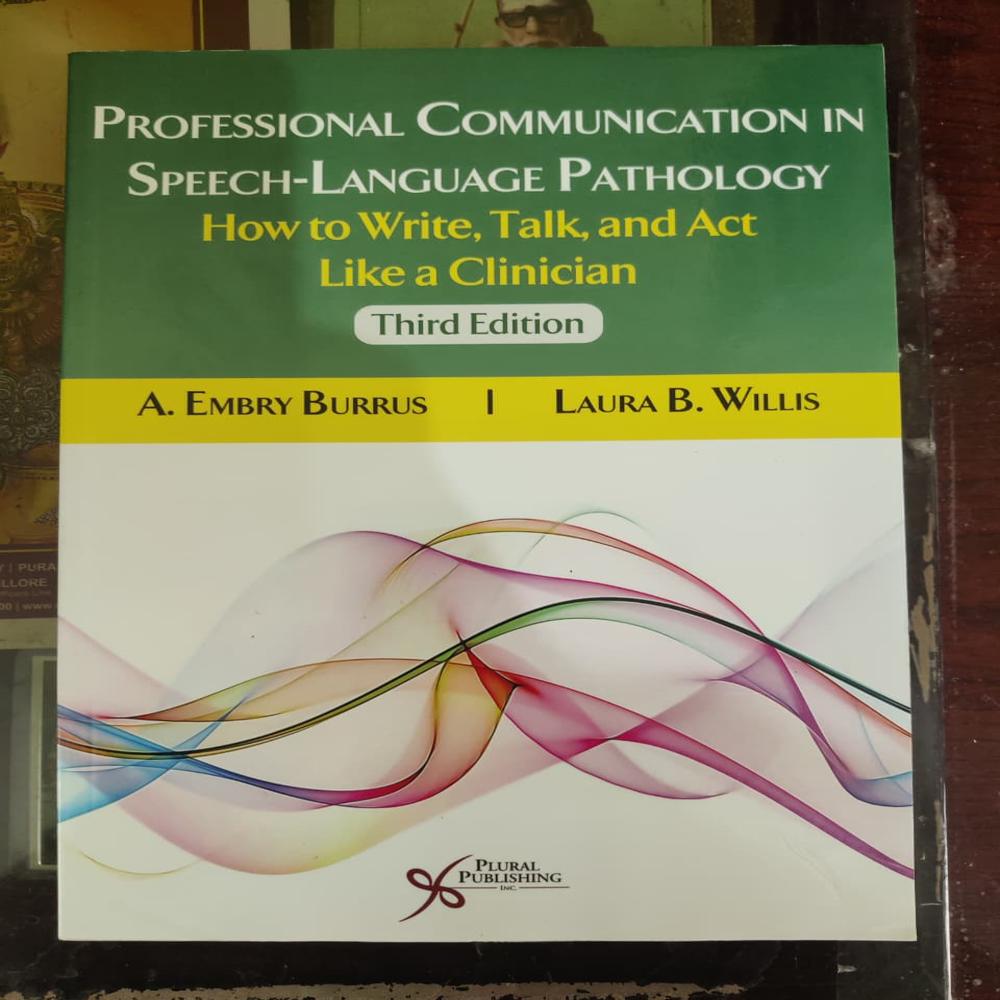
Book Name: Professional Communication in Speech-Language Pathology: How to Write, Talk, and Act Like a Clinician (Third Edition)
Authors: A. Embry Burrus and Laura B. Willis
Description:
This book is a professional guide for students and practitioners in speech-language pathology (SLP). It focuses on helping clinicians develop strong communication skills required in healthcare and clinical environments.
Key topics include:
- Professional and clinical writing skills
- Patient and family communication techniques
- Documentation and report writing
- Clinical presentations and professional speaking
- Ethical and workplace communication
- Building confidence and professionalism as a clinician
The book is designed to teach readers how to communicate effectively in clinical practice, making it useful for SLP students, speech therapists, and healthcare professionals.
Mastering Clinical Communication SkillsEffective communication is at the heart of successful clinical practice. This book offers clear guidelines and real-life scenarios to help readers develop their professional voice, write clinical documents, and interact confidently with clients and colleagues. Whether you are a student, new clinician, or experienced practitioner, this edition provides the structure and support needed to enhance your proficiency in all forms of professional communication.
Practical Guidance for Real-World SettingsThis guide bridges the gap between theory and practice using approachable language and actionable examples. Through interactive exercises and up-to-date information, you'll learn processes for documentation, case presentation, collaborative consultation, and ethical communication. Teachers and professionals will also find it invaluable for curriculum support and ongoing professional development.
FAQ's of Professional Communication in Speech-Language Pathology: How to Write, Talk, and Act Like a Clinician (Third Edition) Book:
Q: How does this book help speech-language pathology students and clinicians improve their communication skills?
A: The book guides readers through the principles and practical steps for producing clear, effective written and verbal clinical communications. It uses examples, exercises, and checklists tailored to common scenarios in speech-language pathology, supporting the development of professional documentation, client interaction, and interprofessional collaboration.
Q: What topics relevant to professional communication are covered in the third edition?
A: Topics include writing clinical reports, presenting case information, documentation standards, interacting with clients and families, professional and ethical communication, managing sensitive topics, and using technology in clinical correspondence. The third edition addresses current best practices and updates in the field.
Q: When and where is this book most useful during a speech-language pathologist's career?
A: The book is especially useful during academic training, clinical internships, and the early years of professional practice. It's an ideal reference for course assignments, exam preparation, and for ongoing consultation in the workplace. Educational institutions often recommend it as a foundational text.
Q: What is the process recommended by the authors for writing effective clinical documents?
A: The authors outline a step-by-step approach incorporating assessment data collection, audience consideration, clear organization, objective language, and proofreading. Drafting, revising, and using standardized templates are emphasized to ensure accuracy and professionalism in documentation.
Q: How can the book be used for professional development and training purposes?
A: Institutions and supervisors can use the book to guide workshops, facilitate discussion groups, and structure feedback sessions. The detailed content and exercises promote self-reflection and assessment, making it a practical tool for improving clinical communication over time.
Q: What are the primary benefits of using this book as a reference guide?
A: Users benefit from its clear explanations, relevance to real-world clinical settings, and emphasis on ethical and effective communication. The book supports both immediate learning needs and long-term skill development, helping readers become more confident and competent clinicians.

 GST No.33ACKPV1876F1ZB


 Our Products