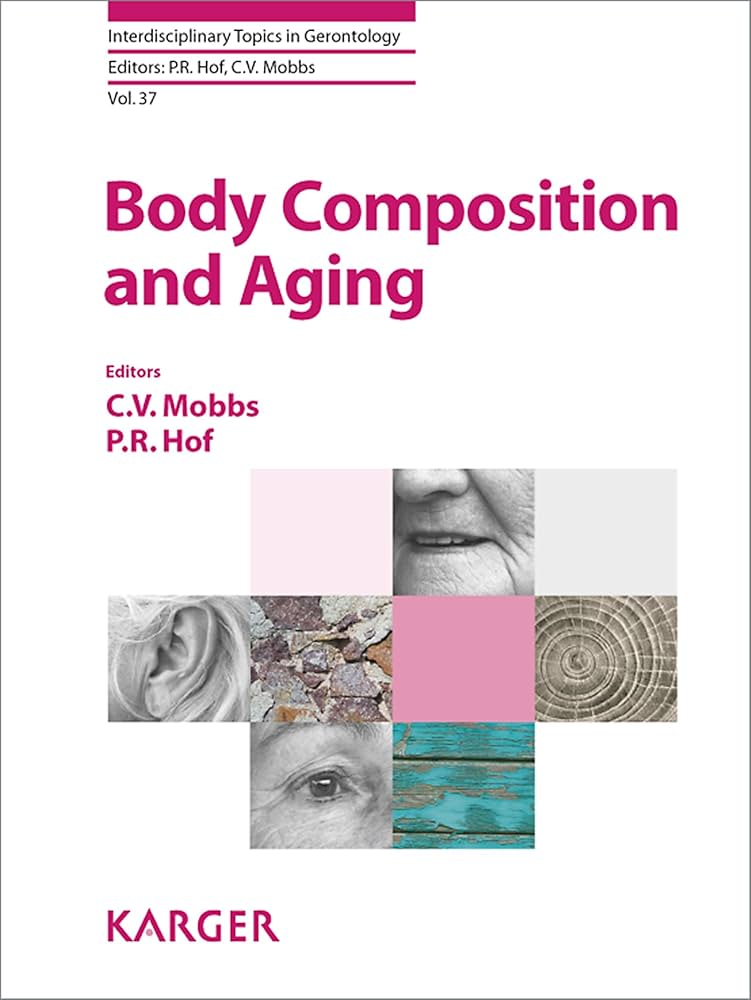
Body Composition and Aging Book Description
Body Composition and Aging is a scientific reference book edited by C.V. Mobbs and P.R. Hof, published in 2010 as part of the Interdisciplinary Topics in Gerontology and Geriatrics series.
Overview
This book provides an in-depth exploration of how body composition changes with aging and how these changes influence health, disease, and longevity. It focuses on the shift in body componentsparticularly the increase in fat mass (adiposity) and decline in muscle and bone masswhich are key contributors to age-related disorders and functional decline.
Key Features
- Age-related changes in body composition
Explains how aging leads to: - Increased body fat
- Decreased lean muscle mass (sarcopenia)
- Reduced bone density (osteoporosis)
- Adiposity and health risks
Discusses the role of excess fat in: - Chronic diseases (e.g., metabolic and cardiovascular disorders)
- Functional disability and reduced quality of life
- The obesity paradox
Examines the complex observation that moderate overweight may reduce mortality risk in older adults despite increasing disease burden. - Energy balance and metabolism
Covers regulation of: - Food intake
- Energy expenditure
- Hormonal influences during aging
- Muscle loss and bone health
Details the causes and consequences of: - Muscle wasting (sarcopenia)
- Bone loss leading to fractures and frailty
- Experimental and clinical perspectives
Includes research models and human studies to understand mechanisms behind aging-related body composition changes.
Target Audience
- Geriatricians and clinicians
- Endocrinologists and nutrition specialists
- Researchers in aging, metabolism, and physiology
- Medical and biomedical students
Overall Summary
Body Composition and Aging offers a comprehensive and research-based analysis of how the human body changes over time. It highlights that aging is not just a chronological process but involves complex physiological alterations in fat, muscle, and bone, which significantly impact health outcomes. The book serves as a valuable resource for understanding and managing age-related diseases, frailty, and metabolic disorders.
Comprehensive Analysis of Body Composition ChangesThis book provides a deep understanding of how and why body composition shifts throughout the aging process. Through thorough exploration of muscle, fat, and bone mass variations, the authors use clear data representations, including charts and graphs, to facilitate comprehension. It serves as a vital resource for examining the nexus between aging and physiological changes.
Ideal for Research and ReferenceFormatted in standard A4 size, with case binding and a laminated glossy hardcover, the book is tailored for repeated reference in both academic and clinical environments. With 384 matte pages printed via offset print for optimal readability, its durability and presentation make it suitable for institutional libraries and personal collections alike.
FAQ's of Body Composition and Aging Book:
Q: How does the book 'Body Composition and Aging' present information on age-related physiological changes?
A: The book organizes scientific findings and expert analysis about shifts in muscle, fat, and bone composition with age. This is conveyed through supporting illustrations, charts, and real-world clinical examples, aiding both learning and research.
Q: What makes this book beneficial for medical professionals and researchers?
A: Its comprehensive content covers not only foundational physiological concepts but also delves into practical assessment techniques and clinical applications, helping inform patient care strategies and research initiatives in gerontology and human biology.
Q: Where can students and professionals best utilize this book?
A: It is especially valuable in academic settings like university libraries, research centers, and clinical teaching environments, where in-depth and referenced knowledge about body composition and aging is required.
Q: When was the first edition of this book published, and what significance does it hold today?
A: The first edition was published in 1997. Despite its original publication date, its carefully curated reference material and foundational concepts remain relevant for understanding fundamental age-related changes in body composition.
Q: What types of images and illustrations does the book include to support its content?
A: The book features a variety of visual aids such as charts, graphs, and illustrations. These help clarify complex physiological processes and make data interpretation more straightforward for readers.
Q: How does the offset print and case binding enhance the usability of the book?
A: The offset print ensures sharp, clear text and image reproduction, and the durable case binding with a laminated glossy cover allows the book to withstand frequent reference, making it long-lasting for libraries and individuals alike.

 GST No.33ACKPV1876F1ZB


 Our Products