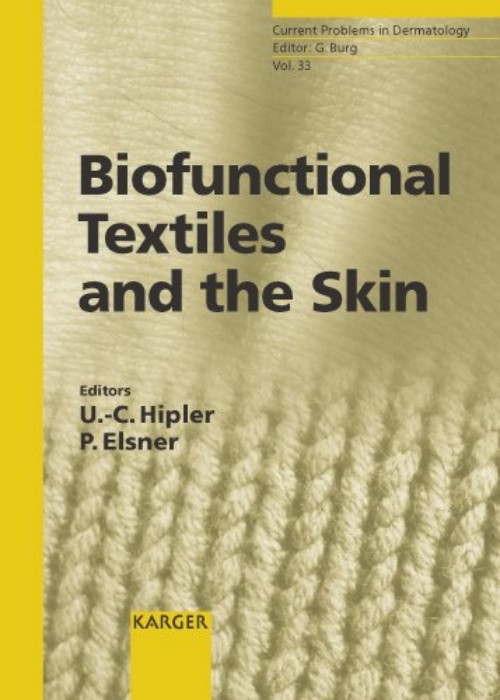
Biofunctional Textiles and the Skin Book Description
Biofunctional Textiles and the Skin is an advanced dermatology and textile science reference book edited by Uta-Christina Hipler and Peter Elsner. It is part of the Current Problems in Dermatology series (Vol. 33), published in 2006.
Overview
This book explores the emerging field of biofunctional (smart) textilesinnovative fabrics designed to interact actively with the human skin. These textiles can sense environmental or physiological changes and respond by releasing or absorbing substances, making them highly relevant in modern dermatology and biomedical applications.
Key Features
- Concept of smart textiles
Explains how advanced fabrics are engineered to interact with the body, including the ability to deliver therapeutic or cosmetic agents directly to the skin. - Skintextile interaction
Provides detailed insights into how textiles affect skin physiology, including moisture balance, temperature regulation, and microbial environment. - Therapeutic and preventive applications
Highlights the use of textiles in: - Treatment of skin diseases (e.g., atopic dermatitis)
- Wound care and healing
- Prevention of infections through antimicrobial fabrics
- Antimicrobial and functional finishes
Discusses innovations such as silver-coated or antimicrobial textiles that help control skin flora and reduce infection risk. - Interdisciplinary approach
Bridges multiple fields, including: - Dermatology
- Immunology and allergy
- Biomaterials science
- Textile engineering
Target Audience
- Dermatologists and clinicians
- Textile engineers and material scientists
- Researchers in biomedical and cosmetic sciences
- Students in dermatology and biomedical engineering
Overall Summary
This book provides a comprehensive overview of how modern textiles can actively support skin health. It emphasizes the transition from passive clothing to functional, therapeutic fabrics, making it a valuable resource for understanding the future of medical textiles and skin care technologies.
Expert Insights into Textile-Skin InteractionsThis book delves into the scientific interactions between human skin and biofunctional textiles, highlighting the latest advances in materials science and dermatology. Its content is meticulously curated by renowned field experts to offer readers a deep understanding of the mechanisms and future prospects in the field.
Vivid Full-Color Illustrations and DiagramsEvery chapter is supported by full-color images and detailed diagrams. These visuals enhance clarity and ensure complex concepts are easily comprehensible, making the book a valuable resource for both learners and professionals.
Sustainable and Professional Book DesignThe product uses eco-friendly, acid-free paper with a glossy hardbound cover. Its robust construction and thoughtfully chosen materials underscore its durability and suitability for academic libraries, institutional collections, and professional use.
FAQ's of Biofunctional Textiles and the Skin Book:
Q: How does Biofunctional Textiles and the Skin Book support educational and professional development?
A: This book serves as an essential resource by providing evidence-based insights for researchers, clinicians, and engineers in dermatology and textile science. Its comprehensive coverage and expert-written content support both advanced learning and practical applications.
Q: What topics are addressed in this textbook regarding the interaction between textiles and human skin?
A: The text examines how various biofunctional textiles influence skin health, including material biocompatibility, dermatological effects, and innovations in textile engineering aimed at improving skin outcomes.
Q: When is it appropriate to use the knowledge from this book in real-world scenarios?
A: Professionals and researchers can apply the book's knowledge while designing, testing, and evaluating medical textiles, developing skin-friendly fabrics, or conducting clinical studies involving skin-textile interactions.
Q: Where can this book be sourced in India?
A: This edition is available through reputable suppliers and traders across India who specialize in academic and professional medical textbooks, especially those serving the fields of dermatology and textile engineering.
Q: What is the process covered in the book for assessing the efficacy of biofunctional textiles?
A: The book outlines standardized testing protocols, clinical evaluation methods, and in-vitro analyses used to determine the functional performance and dermatological compatibility of advanced textile materials.
Q: How can dermatologists and textile engineers benefit from this reference?
A: They gain practical guidelines for material selection, insight into new research findings, and strategies to create safer, more effective textile-based biomedical products that positively impact skin health.

 GST No.33ACKPV1876F1ZB


 Our Products