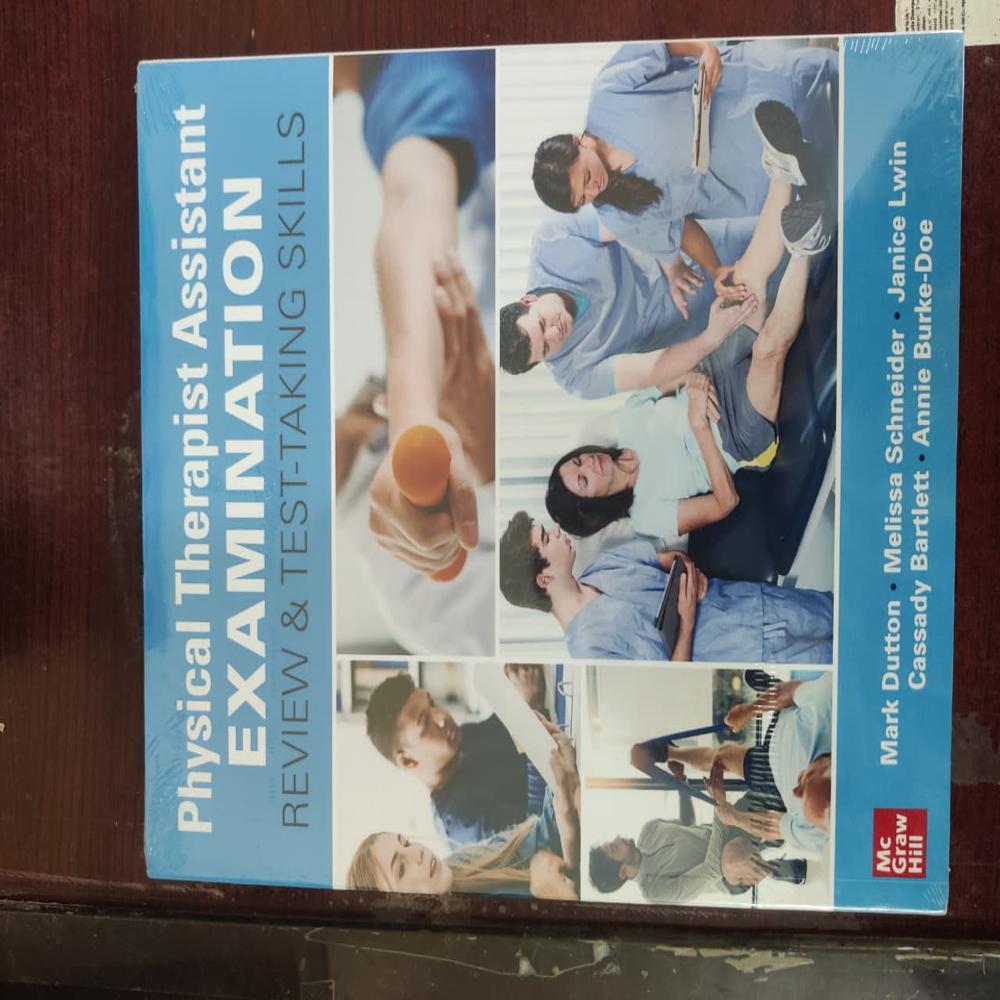
The book in your image is Physical Therapist Assistant Examination Review & Test-Taking Skills
Authors:
- Mark Dutton
- Melissa Schneider
- Janice Lwin
- Cassady Bartlett
- Annie Burke-Doe
Published by McGraw Hill
Description
This book is an exam review and preparation guide for students training to become Physical Therapist Assistants (PTAs).
It is designed to help learners review core physical therapy concepts and improve test-taking performance for academic and licensing examinations.
Topics usually covered:
- Musculoskeletal rehabilitation
- Therapeutic exercise techniques
- Patient assessment and treatment basics
- Neurological and orthopedic conditions
- Functional mobility and patient care
- Clinical problem-solving
- Practice questions and exam preparation
- Test-taking strategies and review exercises
Who typically uses this book?
- Physical Therapist Assistant students
- Physical therapy educators
- Clinical trainees
- Healthcare exam candidates
This book focuses on reviewing physical therapy knowledge and building confidence for examinations and clinical practice.
Comprehensive Board Exam PreparationThis review guide covers all domains of the Physical Therapist Assistant board examination, featuring updated practice questions, proven test-taking strategies, and full-color clinical images. Its structured layout supports targeted study, ensuring test-takers are thoroughly prepared.
Engaging Visual Learning ToolsEnhance your grasp of key concepts with the inclusion of clinical images and clear diagrams. The book's color print and professional graphics are designed to facilitate quick recall and deeper understanding, aiding efficient revision for exam day.
User-Friendly Design and QualityWith perfect binding and matte A4 pages, this review guide offers sturdy handling for repeated use. Its glossy, soft cover further appeals to students and professionals. Comprehensive yet accessible, it's tailored for busy learners seeking reliable exam support.
FAQ's of Physical Therapist Assistant Examination Review & Test-Taking Skills Book:
Q: How does this review guide support test-taking skills for the Physical Therapist Assistant examination?
A: The book provides structured practice questions paired with detailed rationales and proven test-taking strategies, helping students and assistants sharpen both content knowledge and critical thinking needed for the board exam.
Q: What are the main benefits of using this guide for exam preparation?
A: Benefits include comprehensive topic coverage, engaging clinical diagrams, test simulation, and practical tips specifically designed to boost confidence, improve time management, and optimize exam performance.
Q: When should students begin using this review book during their study process?
A: It is recommended to start integrating the review guide early in the study timeline, allowing ample time to practice answering questions, review rationales, and refine test-taking approaches before the actual board examination.
Q: Where can this examination review guide be most effectively used?
A: The guide is designed for versatile use: at home, in study groups, or in classroom settings. Its accessible format and portable A4 size make it convenient for both individual and collaborative study sessions.
Q: What process does the book recommend for answering practice questions?
A: Students are encouraged to attempt questions under timed, exam-like conditions, then review the provided rationales, identify areas for improvement, and revisit related content as needed for comprehensive learning.
Q: How does the inclusion of clinical images and diagrams benefit exam-takers?
A: Visual aids like clinical images and diagrams help reinforce concepts, making recall easier during exams and assisting in the understanding of complex scenarios that are commonly tested.
Q: Who is the intended audience for this examination review book?
A: This guide is crafted for Physical Therapist Assistant students preparing for board exams, as well as practicing PTAs seeking to polish their test-taking skills and stay updated with current best practices.

 GST No.33ACKPV1876F1ZB


 Our Products