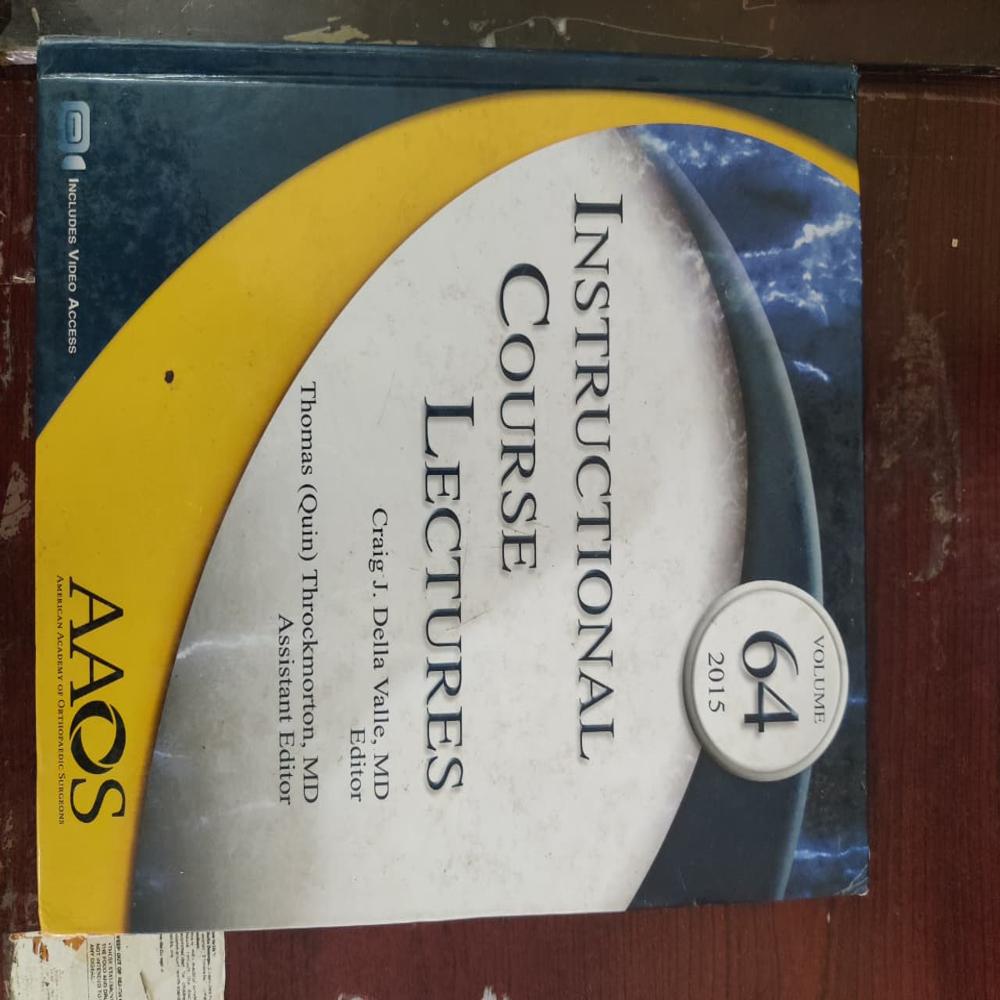
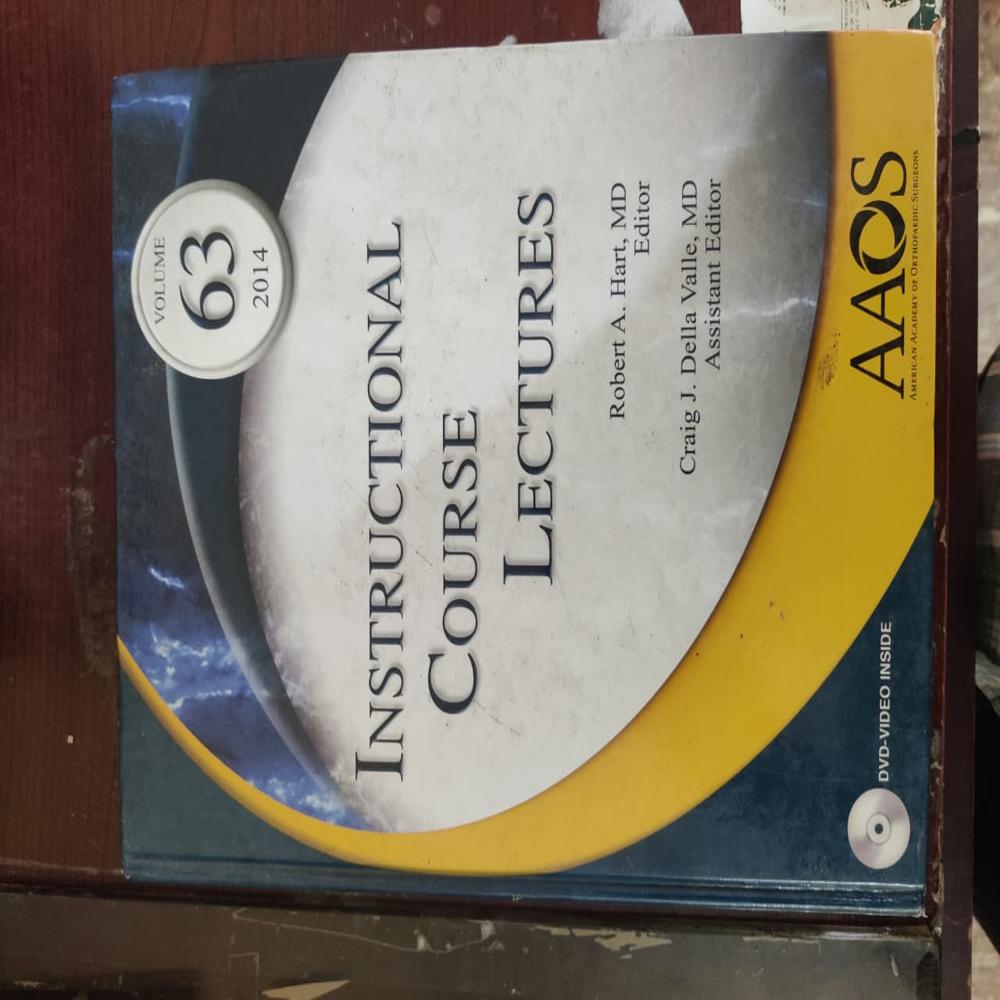
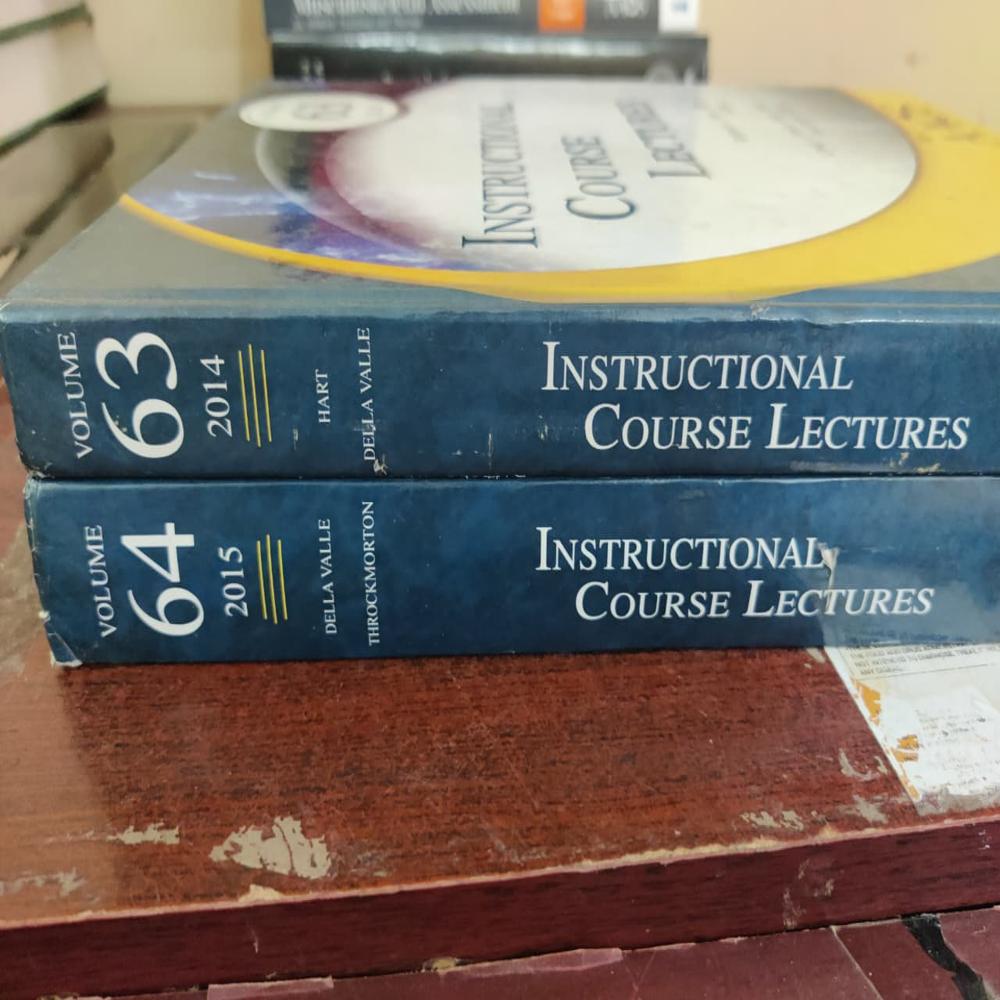
The books in your image are from the series Instructional Course Lectures
Visible volumes:
- Volume 63 (2014)
- Volume 64 (2015)
Associated with American Academy of Orthopaedic Surgeons
Description
Instructional Course Lectures (ICL) is a well-known orthopedic education and reference series that compiles expert lectures and clinical knowledge from orthopedic specialists.
These books are designed to provide practical, evidence-based learning for orthopedic practice and surgical education.
Topics usually covered:
- Orthopedic surgery techniques
- Trauma and fracture management
- Joint replacement and reconstruction
- Sports medicine
- Spine disorders
- Pediatric orthopedics
- Hand and upper extremity conditions
- Clinical decision-making and case discussions
Who typically uses these books?
- Orthopedic surgeons
- Orthopedic residents and fellows
- Medical students
- Sports medicine specialists
- Healthcare professionals in musculoskeletal care
Each volume generally collects updated lectures, clinical insights, surgical approaches, and current orthopedic developments for that year.
Comprehensive Orthopaedic InsightsThis volume presents carefully curated lectures and advanced orthopaedic knowledge, reviewed and assembled by leading experts. The topics are chosen to reflect current trends, evidence-based practices, and evolving clinical techniques, supporting continuous education for both seasoned practitioners and trainees.
Premium Print Quality and AccessibilityPrinted on high-quality matte finish A4 paper with a robust, thick hardcover, this edition is built to withstand regular use in academic or clinical environments. The book's rectangular shape, sturdy construction, and user-friendly layout enhance usability for study, reference, and lecture preparation.
Integrated Learning with Video AccessAlongside comprehensive written content, purchasers gain access to video resources, enabling a multi-modal educational approach. These videos clarify complex procedures and key concepts, allowing for deeper understanding and practical application in real-world orthopaedics.
FAQ's of Instructional Course Lectures:
Q: How can I access the video content included with Instructional Course Lectures, Volume 64?
A: The book provides unique access to video materials that accompany selected chapters. Instructions or direct links for accessing these videos are typically provided within the book, allowing readers to supplement their study with authoritative visual explanations of orthopaedic procedures.
Q: What topics are covered in this volume, and who is the intended audience?
A: Volume 64 compiles a range of current orthopaedic subjects, from surgical techniques to emerging clinical best practices. It is designed primarily for orthopaedic practitioners, residents, fellows, and medical students seeking comprehensive educational resources.
Q: When was Instructional Course Lectures, Volume 64 published, and which organization oversees its content?
A: This volume was published in 2015 by the American Academy of Orthopaedic Surgeons (AAOS), an internationally recognized authority in orthopaedic education and continuing professional development.
Q: Where can this instructional course book be utilized most effectively?
A: The book is well-suited for university libraries, hospital training centers, private practices, and personal study settings. Its academic rigor and practical utility make it valuable for ongoing reference, curriculum development, and clinical training.
Q: What is the process for using this reference in daily practice or study?
A: Readers are encouraged to refer to specific chapters or surgical techniques relevant to their interests or cases. The integrated videos enhance understanding, while the robust hardcover design supports frequent consultation in both clinical and educational contexts.
Q: How does this volume benefit orthopaedic professionals and students?
A: The book delivers up-to-date, peer-reviewed information and step-by-step guidance to support clinical decision-making, exam preparation, or skills advancement. Video access enriches learning, while the extensive, clearly organized content ensures it remains a dependable referential tool.

 GST No.33ACKPV1876F1ZB


 Our Products