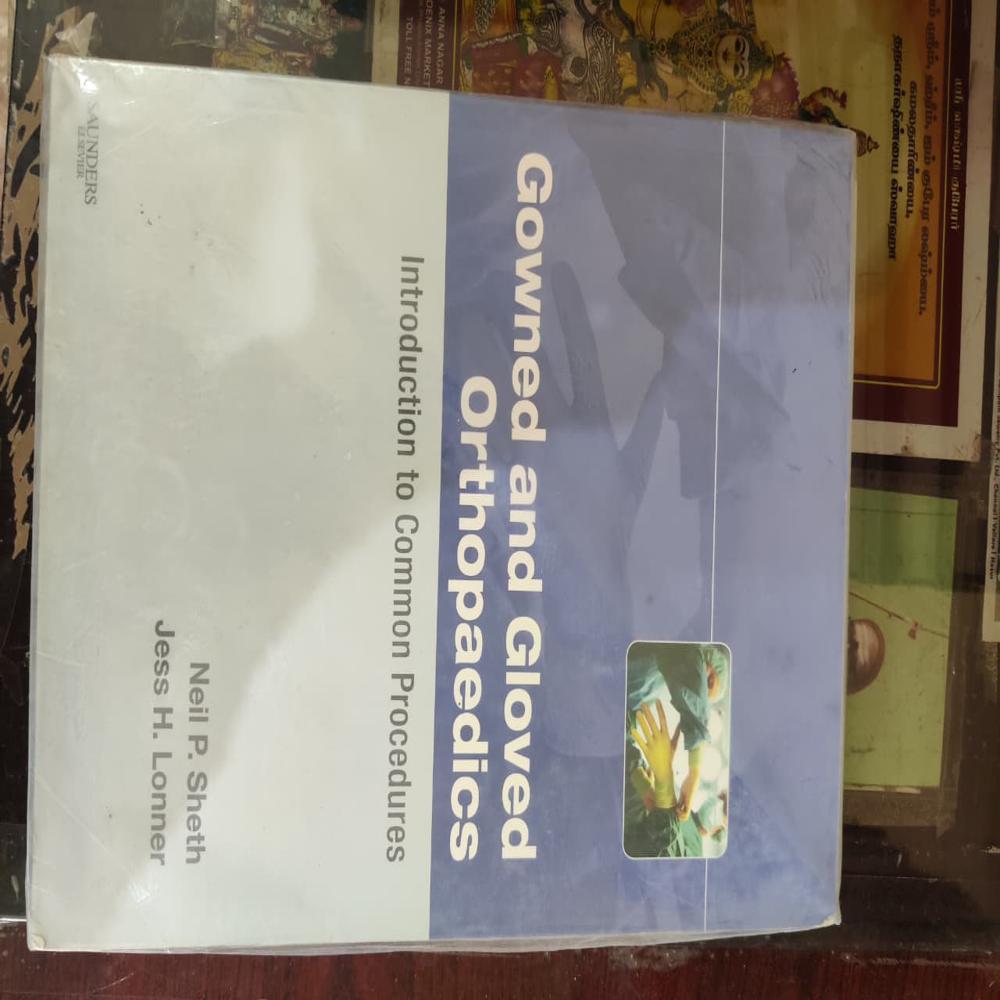
Gowned and Gloved Orthopaedics Book Price & Specifications
Weight Approx. 750-900 grams
Thickness Standard (approx. 1.5-2 cm)
Shape Rectangular
Print Type Color Print
Paper Type Matte Finish Paper
Paper Size A4
Pages 200-300 (estimated)
Books Type Other, Textbook, Reference Book
Board Type Paperback Cover
Board Thickness Approx. 1.5 mm
Binding Perfect Binding, Other
Audience Medical Students, Orthopaedic Surgeons, Residents, Medical Students, Orthopaedic Surgeons, Residents
About Gowned and Gloved Orthopaedics Book Detail
Book Name: Gowned and Gloved Orthopaedics
Description:
This book is an introductory guide to common orthopaedic surgical procedures and operating room practices. It is designed for medical students, residents, and healthcare professionals who are beginning orthopaedic training.
Authors:
- Neil P. Sheth
- Jess H. Lonner
Main topics covered:
- Basics of orthopaedic operating room setup
- Surgical gowning and gloving techniques
- Sterile procedures and infection control
- Common orthopaedic instruments and equipment
- Introduction to routine orthopaedic surgeries
- Patient preparation and surgical workflow
- Practical tips for trainees and residents
This book is mainly used as a beginner-friendly practical handbook for orthopaedic clinical and surgical training.
Comprehensive Surgical GuidanceThis textbook breaks down common orthopaedic procedures into step-by-step instructions suited for beginners and experienced practitioners alike. Utilizing color print and illustrative diagrams, it provides clarity on surgical techniques necessary for orthopaedic practice and training.
User-Friendly Format and Durable ConstructionWith a glossy cover and matte finish pages, the book is thoughtfully designed in standard A4 size for easy handling and note-taking. Its perfect binding and robust construction ensure longevity, making it a reliable companion in the clinical environment.
Ideal Reference for Skill DevelopmentWhether used for in-depth study or quick reference, this book supports medical students, residents, and surgeons in mastering key orthopaedic skills. Its clear layout and detailed content make it an excellent resource for building knowledge and preparing for exams or procedures.
FAQ's of Gowned and Gloved Orthopaedics Book:
Q: How does Gowned and Gloved Orthopaedics benefit medical students and residents?
A: This book offers clear explanations and step-by-step illustrations of common orthopaedic surgical procedures, aiding in both exam preparation and practical skill development. Its educational approach makes it especially useful for those new to orthopaedics or refining foundational techniques.
Q: What types of procedures are covered in this textbook?
A: The book focuses on frequently encountered orthopaedic procedures, providing introductory knowledge suitable for clinical reference. It emphasizes real-world techniques, surgical workflow, and critical steps for operating room success.
Q: When should I use this book during my training?
A: Gowned and Gloved Orthopaedics is ideal for use throughout your medical education-from your first encounter with orthopaedic surgery to residency. It serves as both a learning guide before procedures and a refresher for reviewing key techniques.
Q: Where can this textbook be utilized most effectively?
A: This reference book is designed for clinical settings, classrooms, and study environments. Its sturdy construction and clear layout make it especially suitable for use in hospitals, clinics, and academic institutions alike.
Q: What is the process described in this book for learning orthopaedic techniques?
A: The authors use a methodical approach, presenting each procedure with clear illustrations and concise step-by-step instructions. This process promotes a thorough understanding of essential skills necessary for safe and effective patient care.
Q: How is the quality of the physical book ensured?
A: The first edition features a glossy paperback cover, perfect binding, and durable matte-finish pages in an A4 format. Its construction provides both longevity and ease of use, accommodating frequent handling in medical and academic environments.

 GST No.33ACKPV1876F1ZB


 Our Products