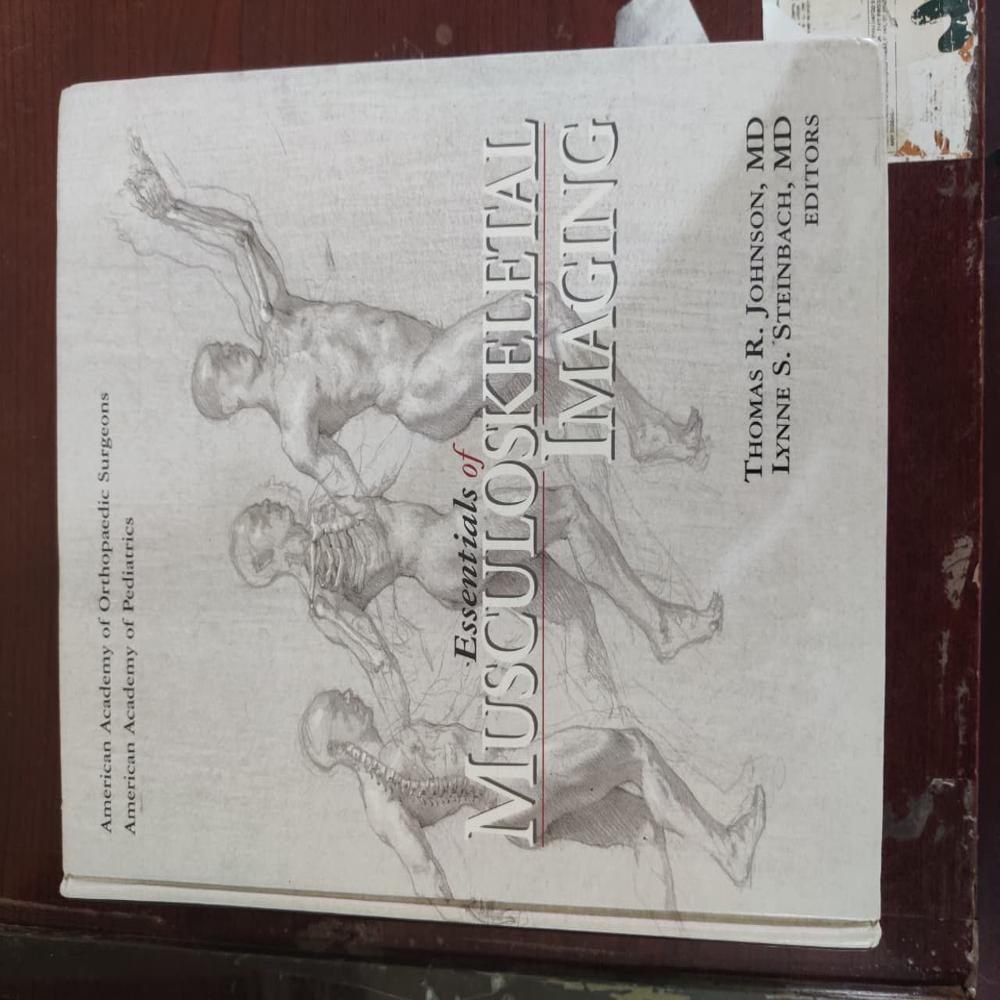
Essentials of Musculoskeletal Imaging Book Price & Specifications
Weight Approx. 1.2 kg
Thickness Standard Textbook Thickness (approx. 2 cm)
Shape Rectangular
Print Type Offset Print
Paper Type Matte Finish Paper
Paper Size Large (approx. A4)
Pages Approx. 400+ pages
Books Type Other, Medical Reference Book
Board Type Hardcover
Board Thickness Standard Hardcover Thickness (approx. 2.5 mm)
Binding Other, Case Bound with Jacket
Audience Medical Professionals, Orthopaedic Surgeons, Radiologists, Medical Students, Medical Professionals, Orthopaedic Surgeons, Radiologists, Medical Students
About Essentials of Musculoskeletal Imaging Book Detail
Editors:
- Thomas R. Johnson
- Lynne S. Steinbach
Description
This is a medical imaging textbook focused on the musculoskeletal system (bones, joints, muscles, ligaments, tendons, and spine). It is commonly used by:
- Orthopedic surgeons
- Radiologists
- Medical students
- Pediatric specialists
- Healthcare professionals learning diagnostic imaging
Topics usually covered:
- Normal bone and joint anatomy
- X-ray interpretation
- MRI and CT imaging basics
- Sports injuries and fractures
- Spine imaging
- Pediatric musculoskeletal conditions
- Bone and soft-tissue disorders
The cover also mentions the American Academy of Orthopaedic Surgeons and American Academy of Pediatrics, indicating it is intended as an educational/clinical reference.
Comprehensive Reference for Musculoskeletal DiagnosticsEssentials of Musculoskeletal Imaging is crafted to provide an authoritative resource for medical professionals involved in musculoskeletal diagnostics. Covering a wide range of imaging techniques and anatomical insights, the book supports both daily clinical practice and academic research. The editors integrate expert commentary and detailed visuals for an enhanced learning experience.
High-Quality Print and User-Friendly DesignProduced with sturdy case-bound binding and a glossy jacket, this edition uses large A4 matte paper to maximize readability of text and illustrations. The offset printing process ensures sharp image reproduction, while the standard thickness offers durability. The ergonomic hardcover and manageable weight allow for convenient use at clinics, lecture halls, or home study.
FAQ's of Essentials of Musculoskeletal Imaging Book:
Q: How is Essentials of Musculoskeletal Imaging typically used in clinical practice?
A: This book is commonly used as a diagnostic reference by medical professionals, particularly orthopaedic surgeons and radiologists, who require comprehensive and up-to-date information on musculoskeletal imaging for patient assessments and case evaluations.
Q: What topics and imaging modalities are covered in the book?
A: The book covers a wide array of musculoskeletal imaging modalities, including X-ray, MRI, CT, and ultrasound, along with detailed anatomical drawings and discussions on how to interpret various imaging results relevant to musculoskeletal conditions.
Q: Who can benefit most from using Essentials of Musculoskeletal Imaging?
A: Medical professionals such as orthopaedic surgeons, radiologists, and medical students pursuing careers in musculoskeletal health will find this book especially beneficial as a core reference for both diagnostics and learning.
Q: When should this reference book be consulted?
A: Essentials of Musculoskeletal Imaging should be referenced whenever detailed guidance or clarification on musculoskeletal imaging or diagnosis is required, whether in clinical, educational, or research settings.
Q: Where can the book be used for maximum effectiveness?
A: Due to its durable binding and large format, the book is ideal for use in clinics, academic libraries, radiology departments, and study environments where in-depth reference materials are essential.
Q: What is the process behind the book's visual content and design?
A: The book's visual content is curated by leading experts and features medical art with anatomical drawings printed with offset technology on high-quality matte paper to ensure clarity and accuracy for educational purposes.

 GST No.33ACKPV1876F1ZB


 Our Products