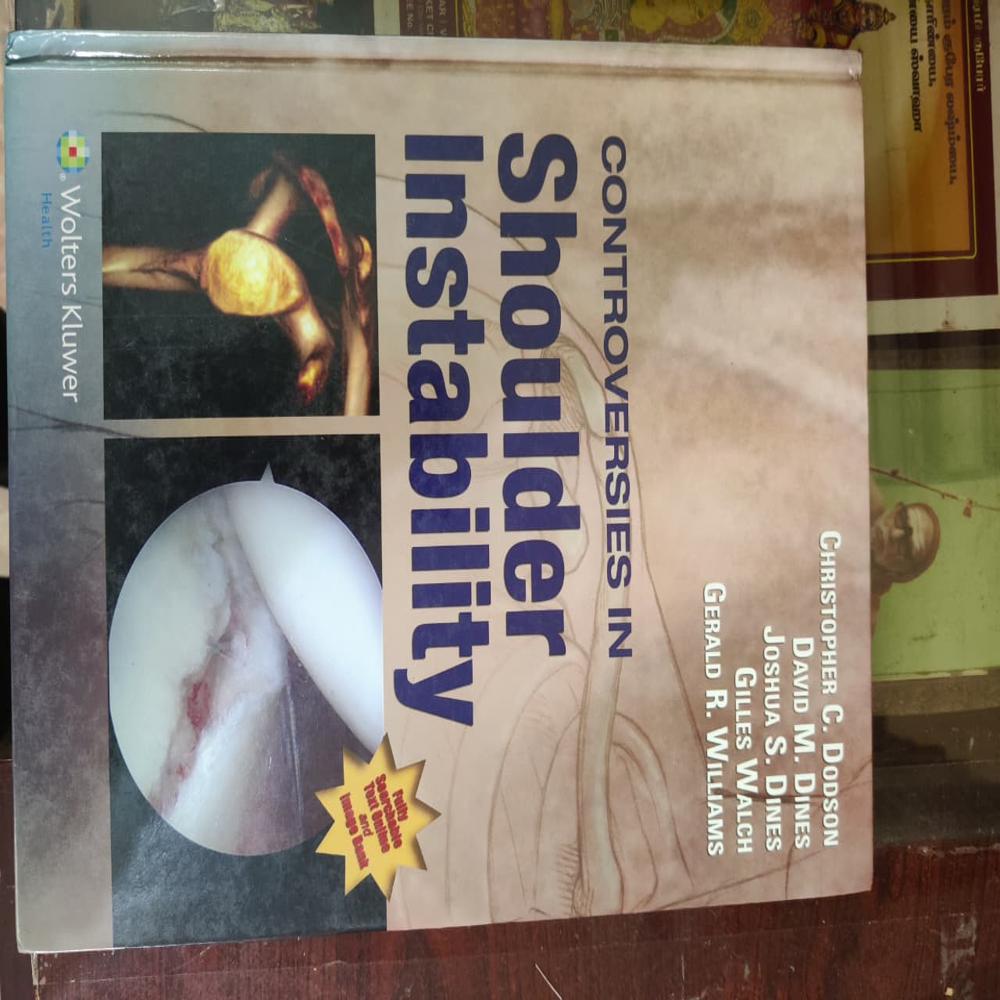
Controversies in Shoulder Instability Price & Specifications
Weight Approx. 1.2 kg
Thickness Approx. 1 inch
Shape Rectangular
Print Type Color Print
Paper Type High-quality Glossy Paper
Paper Size Large (approx. 8.5 x 11 inches)
Pages Not specified on cover (estimated 300-400 pages)
Books Type Medical Reference Book, Other
Board Type Hardcover
Board Thickness Standard hardcover thickness
Binding Other, Hardbound
Audience Orthopedic Surgeons, Medical Students, Healthcare Professionals, Orthopedic Surgeons, Medical Students, Healthcare Professionals
About Controversies in Shoulder Instability Detail
The book in your image is Controversies in Shoulder Instability
Authors / Editors:
- Christopher C. Dodson
- David M. Dines
- Joshua S. Dines
- Gilles Walch
- Gerald R. Williams
Published by Wolters Kluwer Health
Description
This is a specialized orthopedic and sports medicine textbook focused on shoulder instabilityconditions where the shoulder joint repeatedly slips, dislocates, or feels unstable.
The book discusses different expert opinions and treatment approaches for complex shoulder problems.
Topics usually covered:
- Anatomy and biomechanics of the shoulder
- Shoulder instability and recurrent dislocation
- Clinical examination and diagnosis
- Arthroscopic and open surgical techniques
- Labral and ligament injuries
- Imaging evaluation (MRI, CT)
- Rehabilitation and return-to-sport planning
- Challenging and controversial treatment decisions
Who typically uses this book?
- Orthopedic surgeons
- Shoulder specialists
- Sports medicine physicians
- Orthopedic residents and fellows
- Physical rehabilitation professionals
This book focuses on evidence-based discussion and modern treatment strategies for shoulder instability and surgical decision-making.
Expert Insights into Shoulder InstabilityThis book presents authoritative perspectives from renowned orthopedic specialists on challenging aspects of shoulder instability. The contributors synthesize decades of clinical experience, offering readers a well-rounded understanding of controversies in this field. Each chapter is carefully curated to address diagnostic dilemmas and the latest advancements in treatment techniques, making this reference an essential part of any orthopedic library.
Detailed Operative Techniques IllustratedPacked with high-quality, color-printed images on glossy, large-format pages, this edition enhances learning through vivid illustrations. Step-by-step operative procedures are featured, helping surgeons visualize complex interventions and apply them confidently in clinical practice. This visual content maximizes comprehension for readers at all experience levels.
FAQ's of Controversies in Shoulder Instability:
Q: How does this book address the controversies in shoulder instability management?
A: The book explores differing viewpoints on diagnosing and treating shoulder instability, presenting evidence-based arguments from multiple experts. This approach allows readers to critically compare available strategies and select the most suitable options for various clinical scenarios.
Q: What types of operative technique images are included in the book?
A: It features high-resolution, full-color images illustrating a range of surgical procedures for shoulder instability. These images are accompanied by detailed explanations, supporting a deeper understanding of both standard and advanced operative techniques.
Q: When is this reference most useful for orthopedic professionals?
A: This book is particularly valuable during clinical decision-making, surgical planning, and as a foundation for academic teaching or training purposes. Its practical guidance is also relevant for reviewing pre- or post-operative management strategies.
Q: Where can this book be effectively used?
A: Designed for use in clinical, educational, and research settings, the book serves as a handy resource in hospitals, medical schools, training programs, and personal professional libraries.
Q: What is the main benefit of using this medical reference book?
A: The book offers a balanced, comprehensive look at current controversies, helping medical professionals make informed treatment decisions and stay updated with the latest practices. Its clear visuals and well-structured content enhance both learning and practical application.
Q: How can medical students and healthcare professionals maximize their learning from this book?
A: Readers should engage with both the text and images, compare differing management approaches, and apply critical thinking to real-world cases. Discussion with mentors and colleagues may further deepen understanding of complex topics addressed in the book.

 GST No.33ACKPV1876F1ZB


 Our Products