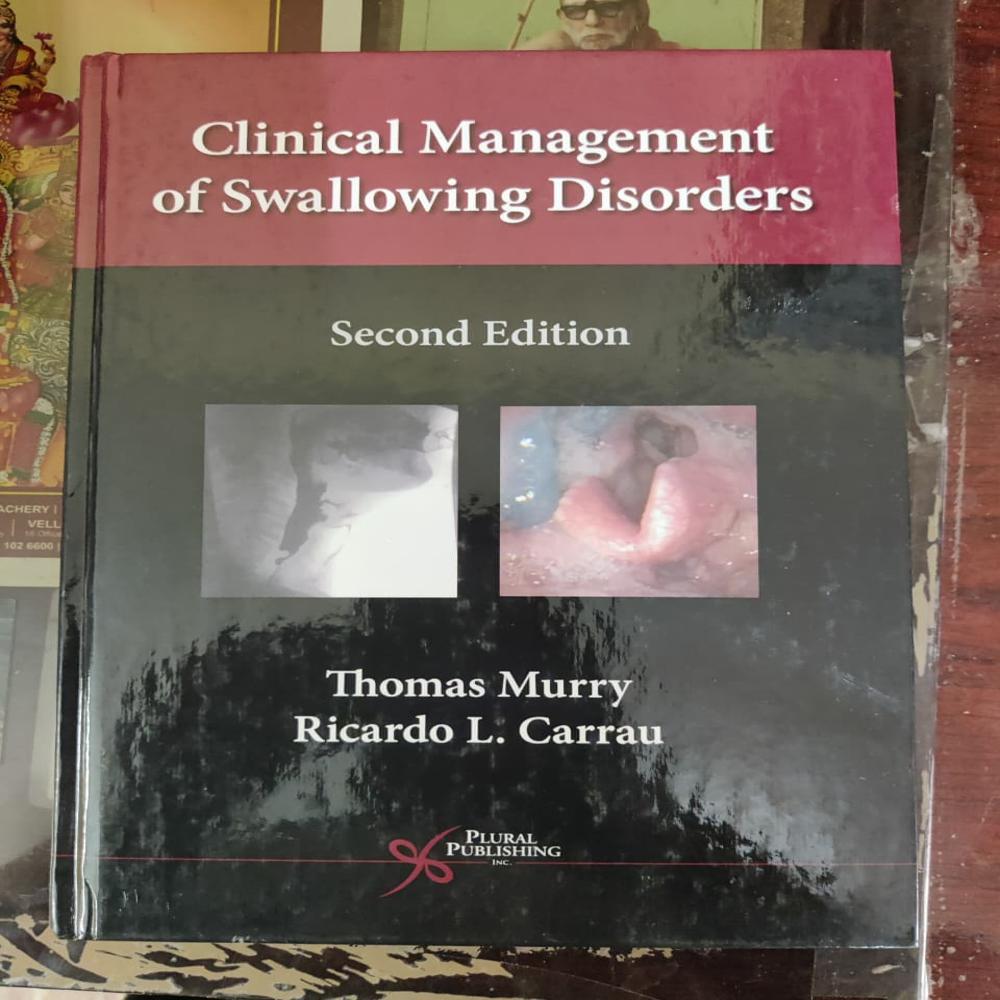
Clinical Management of Swallowing Disorders Book Price & Specifications
Weight Approximately 1-1.5 kg
Thickness Standard Academic Thickness
Shape Rectangular
Print Type Printed, Color & Black-White Images
Paper Type High Quality Glossy Paper
Paper Size A4
Pages Approximately 400-500 (based on standard second edition)
Books Type Other, Medical/Clinical Reference Book
Board Type Hardcover
Board Thickness Durable Hardbound Board
Binding Hard Binding, Other
Audience Medical Professionals, Speech-Language Pathologists, Students, Medical Professionals, Speech-Language Pathologists, Students
About Clinical Management of Swallowing Disorders Book Detail
Book Name: Clinical Management of Swallowing Disorders
Authors: Thomas Murry, Ricardo L. Carrau
Description:
This book is a clinical reference focused on the assessment and treatment of swallowing disorders (dysphagia). It provides evidence-based approaches for diagnosing swallowing difficulties and planning effective rehabilitation.
Key topics covered:
- Anatomy and physiology of normal swallowing
- Evaluation and diagnosis of swallowing disorders (dysphagia)
- Clinical and instrumental assessment techniques
- Treatment and rehabilitation strategies
- Management of swallowing problems related to:
- Neurological conditions
- Head and neck disorders
- Post-surgical recovery
- Patient safety, nutrition, and airway protection
This book is mainly useful for:
- ENT (Otolaryngology) specialists
- Speech-language pathologists
- Rehabilitation professionals
- Medical students and postgraduate trainees
- Clinicians involved in swallowing and voice care
It serves as a practical guide for clinical decision-making and patient management in swallowing disorders.
Comprehensive Educational ReferenceThis book stands out as a trusted guide for clinicians and students delving into the complexities of swallowing disorders. Covering fundamental concepts, diagnostic approaches, and therapy strategies, it supports both learning and clinical application. Its structured format aids in developing practical skills alongside theoretical understanding.
Rich Visual and Clinical ContentClinical Management of Swallowing Disorders features detailed clinical images and medical illustrations. These visuals complement the textual explanations, assisting readers in grasping anatomical details and real-life case scenarios. The mix of color and black-and-white imagery enriches both comprehension and engagement.
Durable and User-Friendly DesignBound in durable hardboard with a glossy cover finish, this book withstands frequent use in clinics and classrooms. Printed on high-quality, glossy A4 paper, the volume is easy to handle and reference, with clear organization across approximately 400-500 pages.
FAQ's of Clinical Management of Swallowing Disorders Book:
Q: How does this book support clinicians in diagnosing swallowing disorders?
A: The second edition presents evidence-based approaches and practical protocols for evaluating swallowing disorders. Step-by-step assessments, clinical images, and guidelines help clinicians identify symptoms and select appropriate diagnostic tools.
Q: What types of illustrations are included in the book?
A: Readers will find a variety of clinical photographs and detailed medical illustrations, depicting both normal and disordered swallowing functions. These visuals facilitate a clear understanding of diagnostic procedures and therapeutic interventions.
Q: When is this book most useful for clinical practice or study?
A: This resource proves invaluable both as an educational text for structured coursework and as a reference in day-to-day clinical practice. Whether reviewing foundational concepts or consulting during patient care, its comprehensive coverage supports diverse needs.
Q: Where can the book be effectively used?
A: Designed for versatility, the book is suitable for medical libraries, speech pathology departments, academic classrooms, and clinical settings where swallowing disorders are assessed or managed.
Q: What is the process for using this book in educational settings?
A: Educators and students can utilize its organized chapters for structured lesson plans, case discussions, and practical application exercises. The visual content enhances interactive learning and deepens conceptual grasp.
Q: Who benefits most from this publication?
A: Medical professionals, particularly speech-language pathologists and clinicians involved in dysphagia management, gain practical guidance and up-to-date knowledge. Students pursuing speech-language pathology or related medical fields also benefit from its accessible, well-illustrated content.
Q: What advantages does the book's physical design offer?
A: Featuring a sturdy hardbound cover and glossy, high-quality A4 paper, the book is resilient to frequent handling and provides a premium reading experience. Its standard academic thickness ensures longevity and ease of use for ongoing reference.

 GST No.33ACKPV1876F1ZB


 Our Products