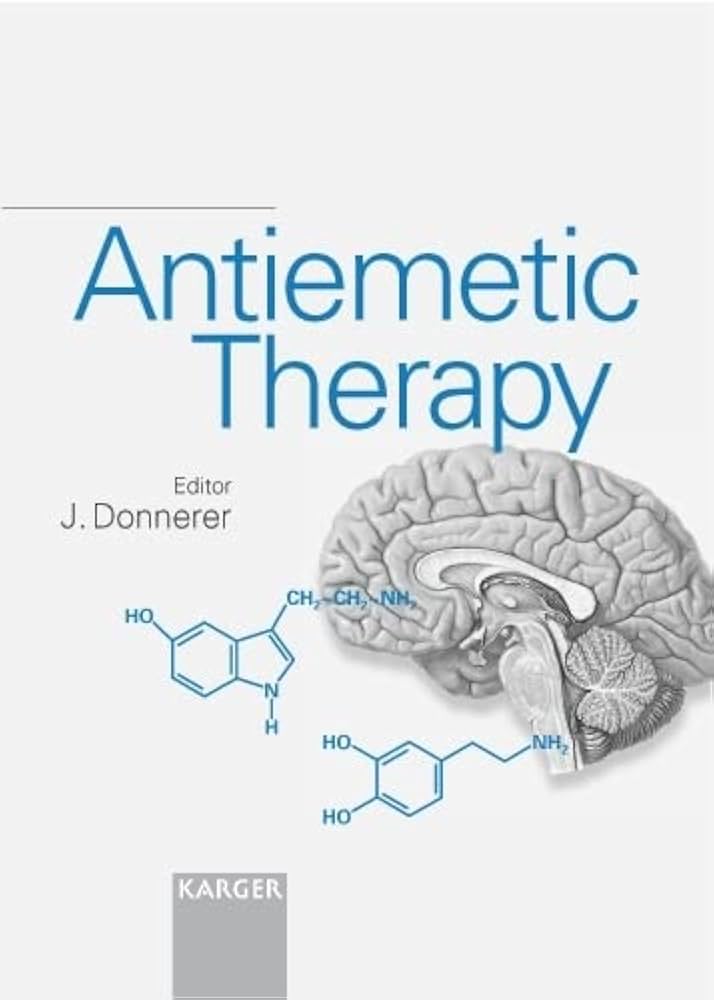
Antiemetic Therapy Book Description
Antiemetic Therapy (edited by Josef Donnerer) is a comprehensive medical reference that focuses on the prevention and treatment of nausea and vomiting (emesis) across a wide range of clinical conditions. The book integrates both basic scientific research and clinical practice, making it valuable for clinicians and researchers alike.
Core Focus of the Book
The book addresses the complex biological mechanisms behind nausea and vomiting, which involve multiple neurochemical pathways and remain only partly understood. It emphasizes the importance of correlating preclinical studies (animal models) with clinical findings to improve therapeutic outcomes.
Key Features
- Comprehensive overview of antiemetic drugs
Covers major classes of antiemetic agents, their mechanisms of action, effectiveness, and safety profiles. - Pathophysiology of emesis
Explains the underlying neural and chemical pathways involved in nausea and vomiting, helping guide rational drug selection. - Comparison of treatment strategies
Evaluates established therapies alongside newer drugs and compounds under clinical investigation. - Drug selection and administration
Provides practical guidance on: - Choice of antiemetic agents
- Dosage and routes of administration
- Tailoring therapy to specific clinical conditions
Clinical Applications
The book highlights the use of antiemetic therapy in various medical settings, including:
- Cancer chemotherapy and radiotherapy (major focus)
- Postoperative nausea and vomiting
- Pregnancy-related nausea (hyperemesis gravidarum)
- Motion sickness and opioid-induced nausea
It also emphasizes improving patient comfort, quality of life, and treatment adherence through effective symptom control.
Structure & Content
- Combines state-of-the-art reviews with research findings
- Includes discussions on:
- Preclinical pharmacology of antiemetics
- Clinical trial data
- Emerging therapies and future directions
- Bridges the gap between laboratory research and bedside practice
Target Audience
This book is suitable for:
- Oncologists and physicians
- Pharmacologists and researchers
- Anesthesiologists and gastroenterologists
- Medical and pharmacy students
Overall Insight
Antiemetic Therapy provides a detailed and practical understanding of managing nausea and vomiting, one of the most common and distressing clinical symptoms. By combining scientific insight with clinical guidance, the book serves as an essential resource for improving patient care in multiple medical disciplines.
Comprehensive Clinical ResourceThis book offers robust, evidence-based information tailored for oncology professionals who frequently encounter antiemetic challenges in patient care. Its clinical guidance helps to optimize antiemetic protocols, benefiting both experienced physicians and those new to oncology settings.
User-Friendly DesignMeasuring 21 x 29.7 cm, with a 2 mm board and hard glossy cover, the book is crafted for frequent use. The matte finish A4 pages are easy on the eyes, while the medium thickness and perfect binding provide durability suited to academic or clinical environments.
Ideal for Medical EducationDesigned with medical students, physicians, and oncologists in mind, the book systematically covers therapeutic guidelines and the rationale behind various antiemetic therapies. It highlights current best practices, ensuring its value as both a teaching and reference tool.
FAQ's of Antiemetic Therapy Book:
Q: How does the Antiemetic Therapy Book assist clinicians in oncology practice?
A: The book provides structured clinical guidance on antiemetic protocols, enabling oncologists and physicians to choose the most effective interventions for managing nausea and vomiting in cancer patients, thereby improving patient outcomes.
Q: What content is covered in the first edition of this book?
A: The first edition covers the foundational principles, current antiemetic regimens, therapeutic guidelines, and the latest research related to nausea management, primarily focusing on oncology and supportive care.
Q: When is it most beneficial to use this medical reference book?
A: This book is particularly beneficial during the diagnosis and treatment planning stages for cancer patients, as well as when updating protocols according to the most recent evidence-based recommendations.
Q: Where can this book be utilized effectively?
A: It is ideally used in clinical oncology departments, medical libraries, academic institutions, and by clinicians in their consulting rooms to inform evidence-based antiemetic care decisions.
Q: What is the process for applying the clinical guidance from this book in practice?
A: Clinicians should consult the therapeutic guidelines and treatment algorithms provided, adapting them to individual patient cases and institutional policies for effective antiemetic management.
Q: How is the physical book designed for durability and ease of use?
A: With a rectangle A4 format, hard glossy cover, medium-thickness matte paper, and perfect binding, the book is sturdy, visually appealing, and easy to handle-ideal for frequent consultation.
Q: What are the benefits for medical students using this book?
A: Medical students benefit by gaining a deep understanding of antiemetic strategies, clinical decision-making processes, and the latest supportive care protocols essential for modern oncology practice.

 GST No.33ACKPV1876F1ZB


 Our Products